
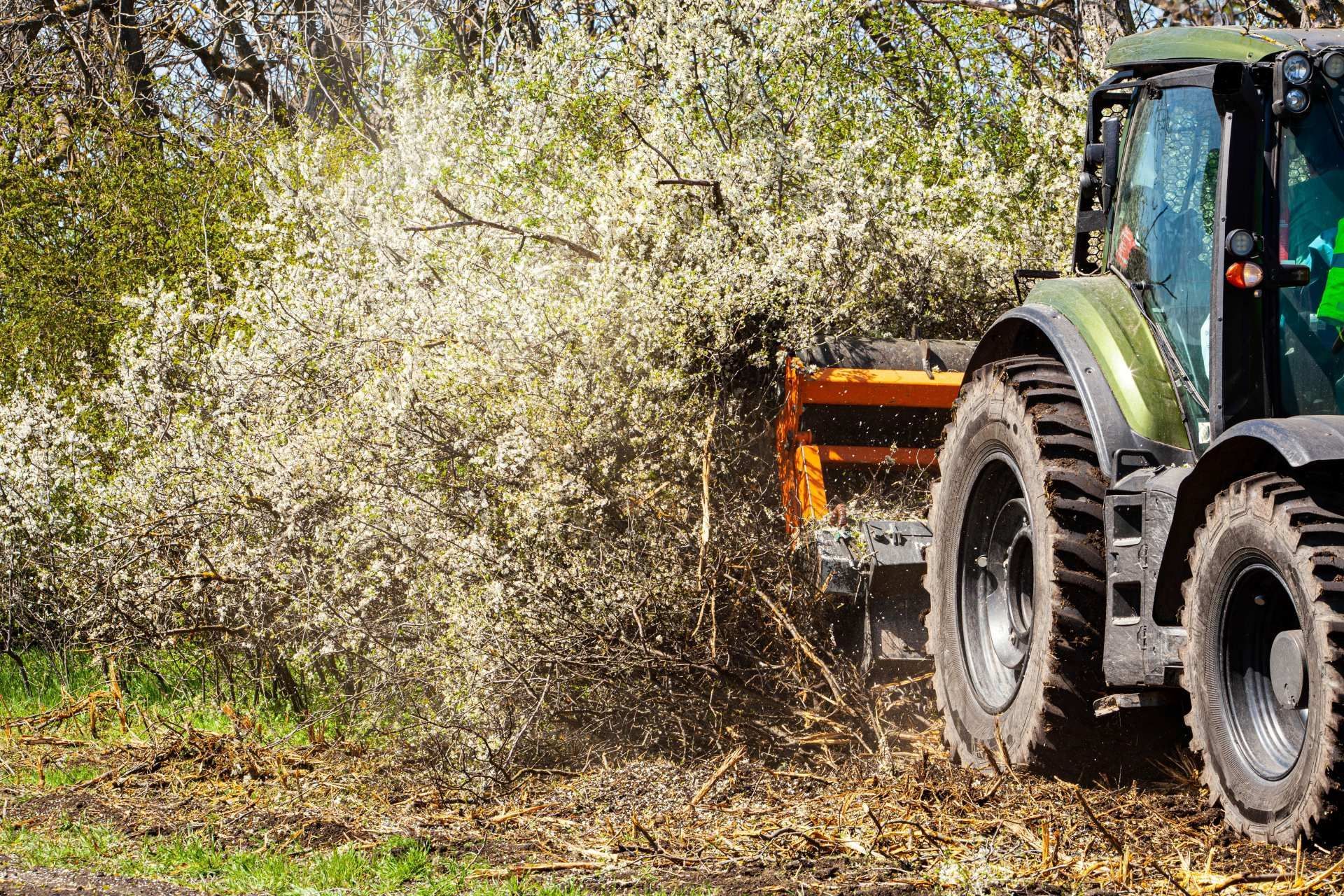
Clear Overgrown Brush and Take Back Your Property
Brush Clearing in Vinton, Bedford, Franklin, Roanoke, Botetourt, and Campbell counties for properties where decades of honeysuckle and young growth have taken over fence lines and tree edges
Older rural properties around Vinton and Troutville often have decades of brush, honeysuckle, and young growth along fence lines, old pastures, and tree edges that has taken over and made boundaries impassable or unusable. Thompsons Land Solutions LLC clears brush and overgrown wooded property across Vinton and the surrounding counties, handling everything from fence line restoration to full pasture reclamation. The owner runs the equipment on every job, so the brush is cut by the same person who gave you the estimate, and the work reflects what you marked during the site walk rather than a generic clearing pattern.
After a walk of the property to mark the edges, boundaries, and anything to protect, the owner works the skid steer through the brush and cuts it down. Material is mulched in place or piled as quoted, and the price reflects acreage and how thick the growth is. On properties around Daleville and Troutville where pastures were abandoned twenty or thirty years ago, the clearing often involves cutting through saplings that have grown into small trees, invasive vines wound through fence wire, and thorny undergrowth that has spread across what used to be open ground.
Request a property walk to review boundaries, vegetation density, and material handling preferences before receiving a quote.
What the Clearing Process Addresses
The skid steer equipped with a brush cutter or mulching head works through the marked area, cutting vegetation at ground level and either chipping it in place or piling it for removal. Honeysuckle and other vines are pulled off fence lines where possible, and saplings are cut flush so the area can be mowed or grazed after the clearing is finished. The process does not remove roots, so follow-up mowing or herbicide treatment is usually needed to prevent regrowth, and that step is handled by you or added to the estimate as a separate service if requested.
Once the clearing is complete, fence lines are visible again, and the ground is accessible for mowing, planting, or livestock. Piled brush is either left for you to burn under permit or hauled off depending on what was agreed in the quote, and any trees or structures you asked to protect remain untouched. The cleared area looks raw immediately after the work, but within one growing season the ground cover fills in if the site is maintained.
The service includes cutting and removing above-ground brush within the marked boundaries, but it does not include stump removal, grading, seeding, or fence repair unless those were quoted separately. If the property includes large downed trees or debris piles from previous clearing attempts, those need to be identified during the initial walk so the scope and equipment can be adjusted.
Questions Before Starting Brush Removal
Landowners reclaiming overgrown pastures and fence lines often ask about equipment, regrowth, and how the work is sequenced with other land improvements.
How is brush clearing different from full land clearing with a forestry mulcher?
Brush clearing focuses on cutting back undergrowth, saplings, and vines to restore access or pasture, while full land clearing removes all vegetation including larger trees to prepare a building site, and the equipment and pricing reflect the difference in density and size of material being removed.
What happens to honeysuckle and other invasive vines after they are cut?
The vines are cut at ground level and pulled off fence wire or tree trunks where feasible, but the roots remain and will resprout unless the area is mowed regularly or treated with herbicide, because cutting alone does not kill established invasive plants.
How thick can the brush be before a skid steer cannot handle it?
A skid steer with a brush cutter handles saplings and undergrowth up to three or four inches in diameter efficiently, but denser stands with larger stems or mature trees mixed in may require a forestry mulcher or chainsaw work before the skid steer can finish the clearing.
What preparation is needed before clearing begins on an old pasture?
Fence lines, property boundaries, and any trees, outbuildings, or equipment you want to keep should be marked clearly, and if the area includes old fence posts or buried debris like rock piles, those should be flagged so the equipment does not hit them.
Can brush be cleared along a fence line without damaging the fence?
Clearing can be done along fence wire as long as the fence is in decent condition, but if the wire is rusted through or posts are rotted, the equipment may pull sections down while cutting vines, so weak fences should be noted during the estimate so the work can be planned accordingly.
Thompsons Land Solutions LLC is fully insured, locally owned, and provides free estimates after walking the property. The company also clears brush in Roanoke, Salem, Daleville, and Troutville.